Play · Growth · Human Flourishing·Powered by AI
Moses Silbiger, MA
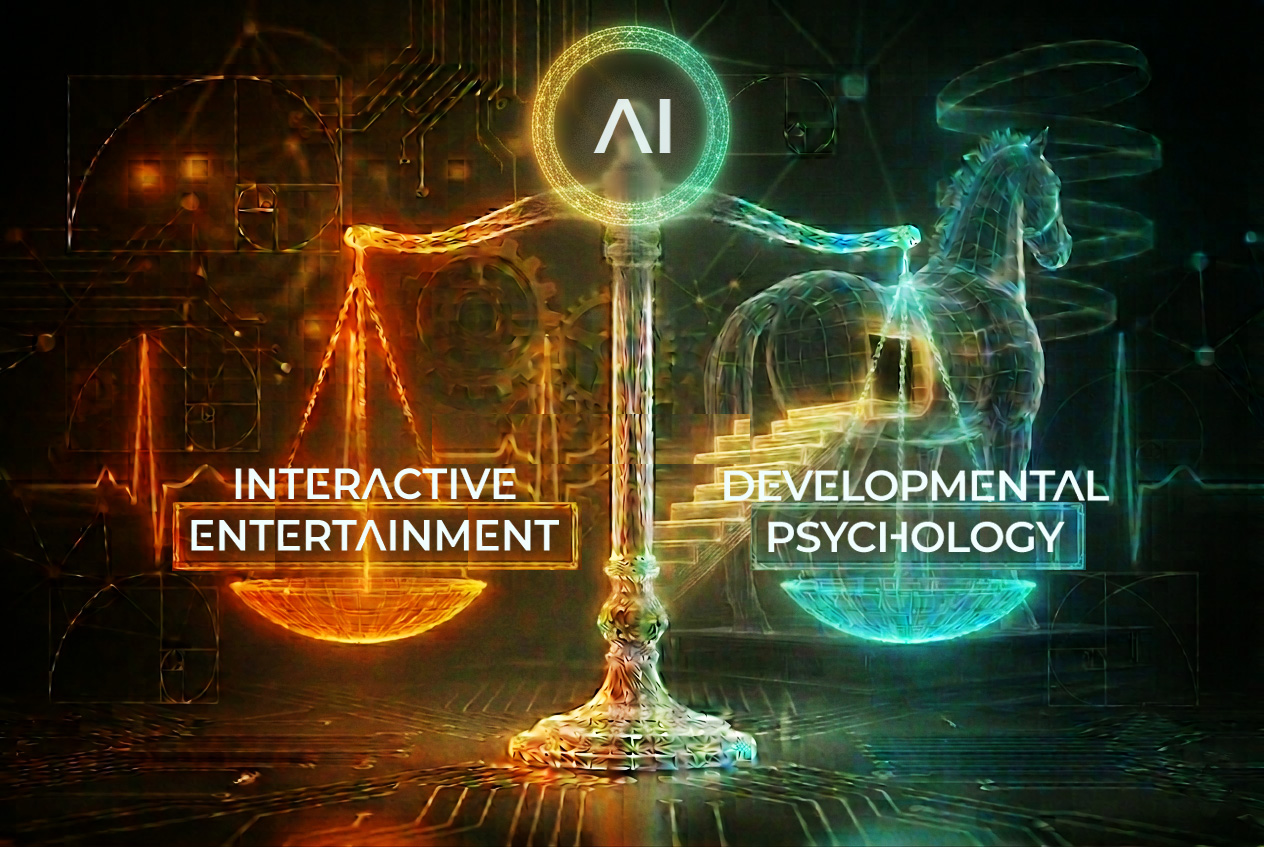
Researcher - AI · Interactive Entertainment · Developmental Psychology

Framework·Research Overview


About the Research
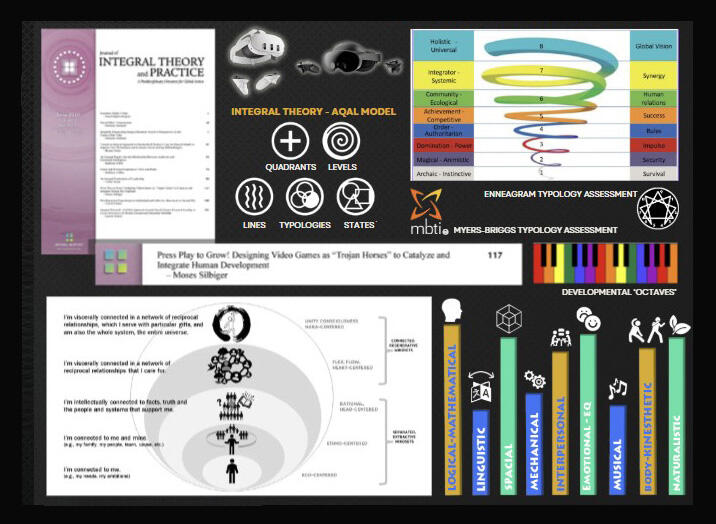
It all started as a peer-reviewed research initiative originally examining, in a pre-AI context, how video games and interactiv entertainment could be intentionally designed to catalyze human development.Formally presented at conferences hosted by the University of Wisconsin-Madison (Games+Learning+Society, 2008), the University of Michigan (Meaningful Play, 2008), andthe Integral Theory Conference at John F. Kennedy University (Honorable Mention, 2008 & 2010) - subsequently published in the Journal of Integral Theory and Practice (JITP, SUNY Press, 2010).
For many years, the model proposed by this research remained largely conceptual.
The architecture was there. The research was there.
The developmental psychology framework was there.
But the technological responsiveness required to make it dynamic did not yet exist.Today, it does.
What was once a framework for catalyzing human development can now become an adaptive system -
capable of responding to individual patterns in real time."
This project began with a simple but powerful question:
What if growth could be embedded inside play?
Not forced.
Not preached.
Not imposed.
But designed.

Core Insights from Developmental Psychology & Integral Theory
Human development is not linear, singular, or uniform.Decades of developmental research - from Piaget’s stages, to Maslow’s motivational structures, to Kohlberg's moral development stages (Harvard), to Gardner’s multiple intelligences (Harvard), to contemporary stage research such as Cook-Greuter's Maturity Assessment Profile (Harvard, MAP), and integrative approaches such as Wilber’s integral theory - converge on a shared understanding:
Growth unfolds across levels, across lines, across perspectives, and across contexts.
People do not grow in one dimension.
They grow cognitively, emotionally, behaviorally, relationally, somatically, morally, ethically, existentially - and at different paces.
And healthy development accelerates not under pressure, but at the developmental edge -
where challenge meets readiness.
This principle echoes Vygotsky’s Zone of Proximal Development.
It appears in Csikszentmihalyi's flow theory.
It is reflected in game design theory through foundational voices such as Gee, Zimmerman, Bogost, and Schell.
It runs consistently across developmental stage research from multiple traditions and schools of thought.
The contribution of this project was not to replace developmental psychology -
but to find an entirely new vehicle for it.
It was to architect growth into adaptive game systems - through joy of play and flow.
But the AI-powered layer that would make this fully operational did not yet exist.

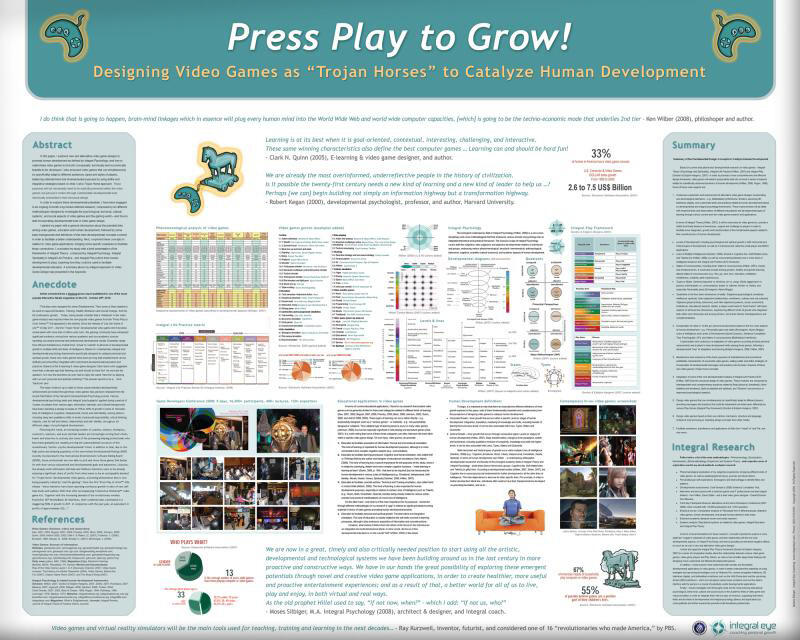
VIEW PRESS PLAY TO GROW!
RESEARCH POSTER
ITC 2008 HONORABLE MENTION

Interview with Ken Wilber
Philosopher, Best-Selling Author, Founder of Integral Theory
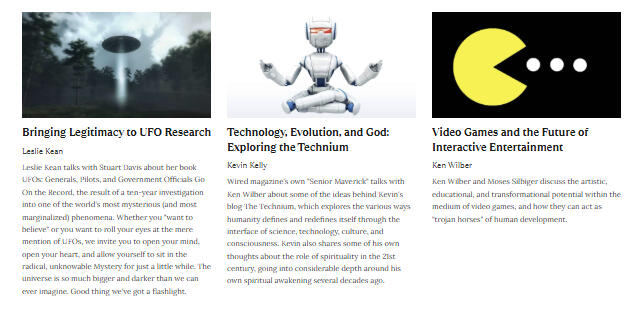
Dialogue & Intellectual Context• Integral Life – Podcast dialogue with Ken Wilber & Moses SIlbiger at IntegralLife.com website• This 2008 conversation appeared on Integral Life's Science & Technology page/section in the same row as Ken Wilber's interviews with Kevin Kelly (Co-founding editor/Founding executive editor of Wired Magazine).
Wilber's interviews with Michael Crichton (Author of Jurassic Park) and Rupert Sheldrake (Morphogenetic Fields) are featured further down the same page.
In a separate section on the site, at the Arts & Creativity page/section, legendary music producer Rick Rubin is featured alongside Lana Wachowski, whose own dialogue with Ken Wilber preceded Wilber & Cornel West's philosophical commentaries for The Ultimate Matrix Collection DVD (2004).(See images)
Video Games and the Future of Interactive Entertainment (2008)Audio conversation exploring how interactive systems can be intentionally designed to catalyze human development -
through developmental architecture and play-embedded growth dynamics
(Hosted by IntegralLife.com – subscription access).



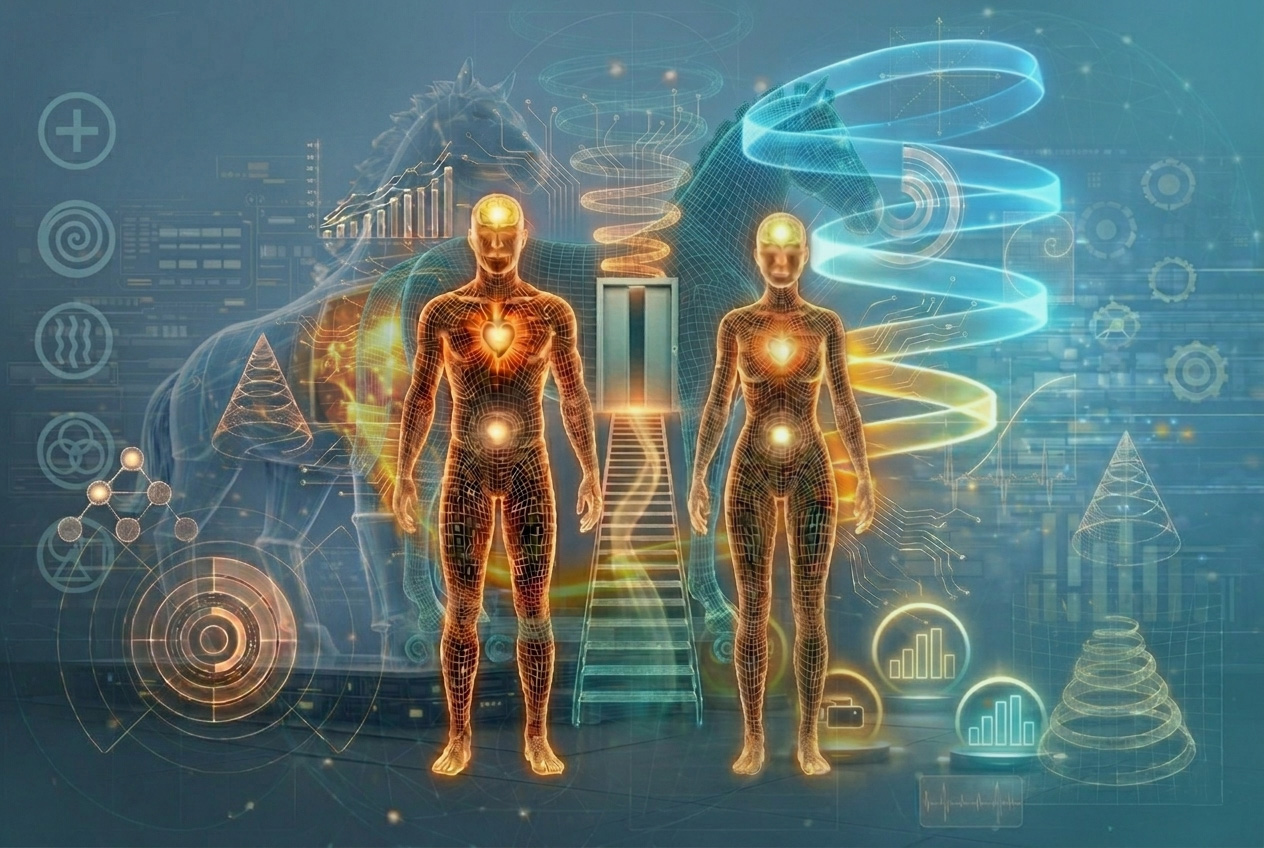
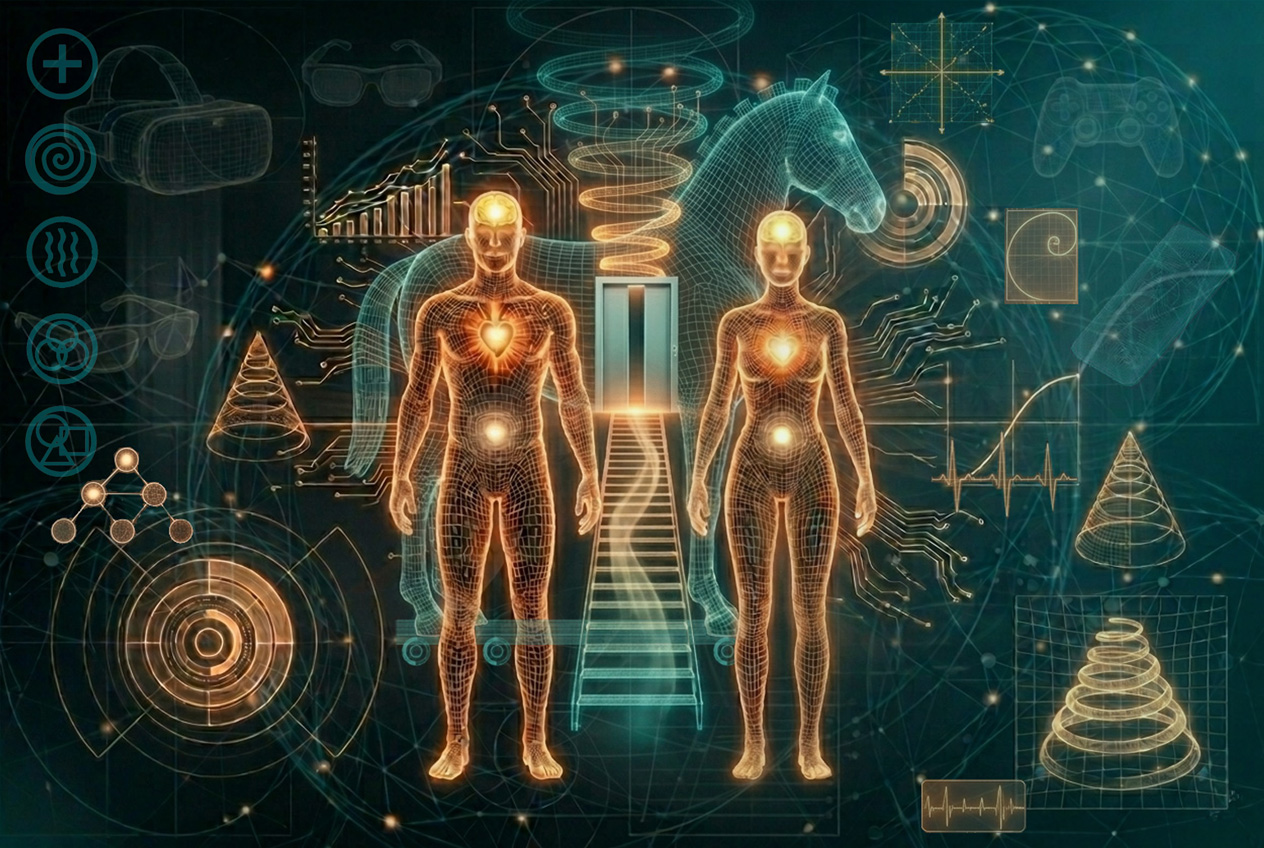
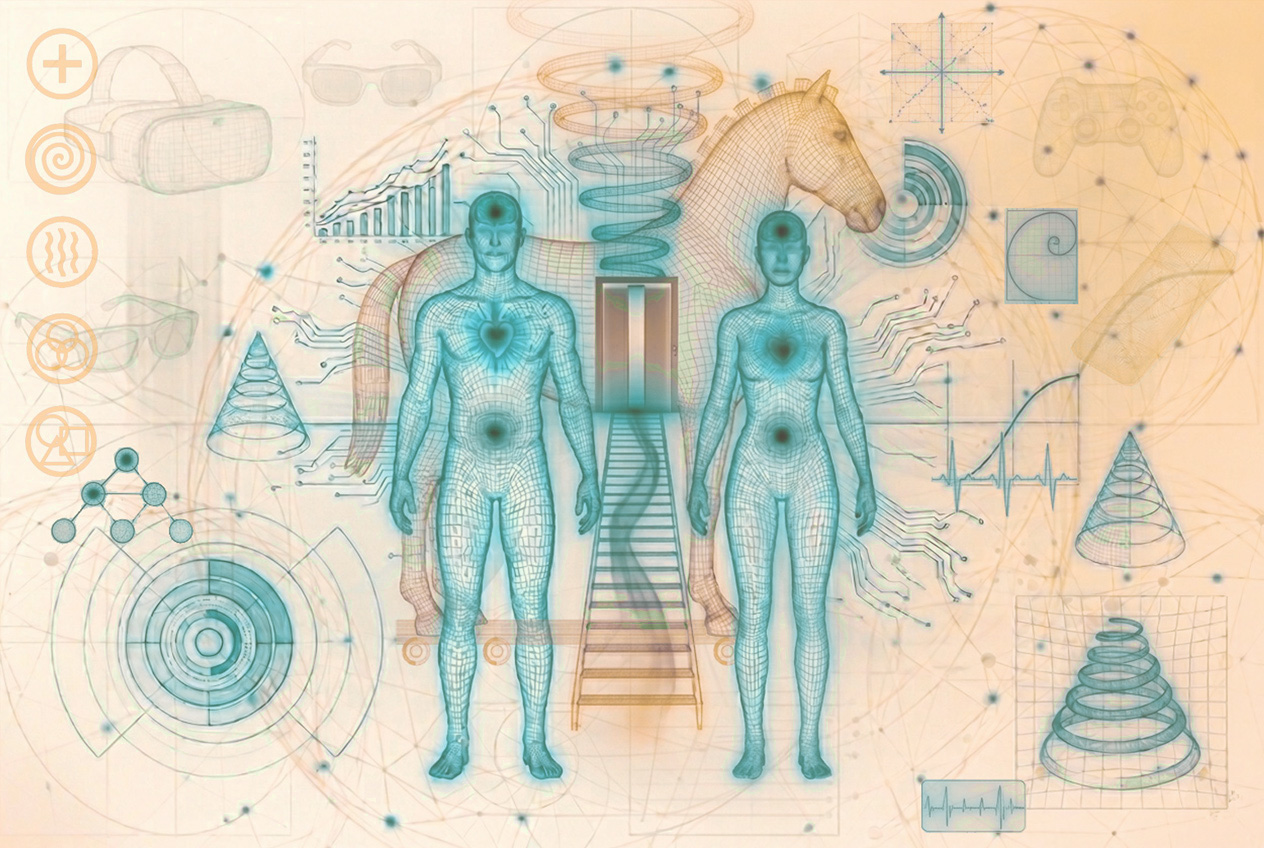
The “Trojan Horse” Approach
The research was originally titled with a deliberately provocative phrase.
"Press Play to Grow!
Designing Video Games as 'Trojan Horses' to Catalyze and Integrate Human Development"
• Journal of Integral Theory & Practice (SUNY Press, 2010), Moses Silbiger
The language was meant to create a moment of friction - and then clarity.
The intention had never been manipulation.
The intention was architectural design.
The idea was this:
When an environment is well designed, growth does not need to be announced.
It can be embedded.
In a well-structured game or simulation:• Engagement creates immersion• Immersion generates feedback• Feedback reveals where the player is ready to grow• The system adapts accordingly
Development is not imposed on the player.
It is invited through pacing, calibration, and responsive structure.
The “Trojan Horse” is not hidden persuasion.
It is the ethical embedding of growth architecture within compelling experience.


Why This Was Ahead of Its Time
When this architecture was first proposed, implementing it dynamically
required technological capacities that were not yet accessible:
• Real-time behavioral pattern detection• Adaptive content generation• State-sensitive calibration• Multi-variable developmental modeling• Continuous feedback integration
Today, AI systems can:
• Detect patterns across interaction style and decision-making• Adjust complexity and challenge dynamically• Personalize environments across cognitive and emotional dimensions• Model user trajectories across time• Adapt systems at scale
This is the inflection point.
The developmental architecture has not changed.
The technological layer has matured.
What was once conceptual can now be operational.


From Theory to System Design
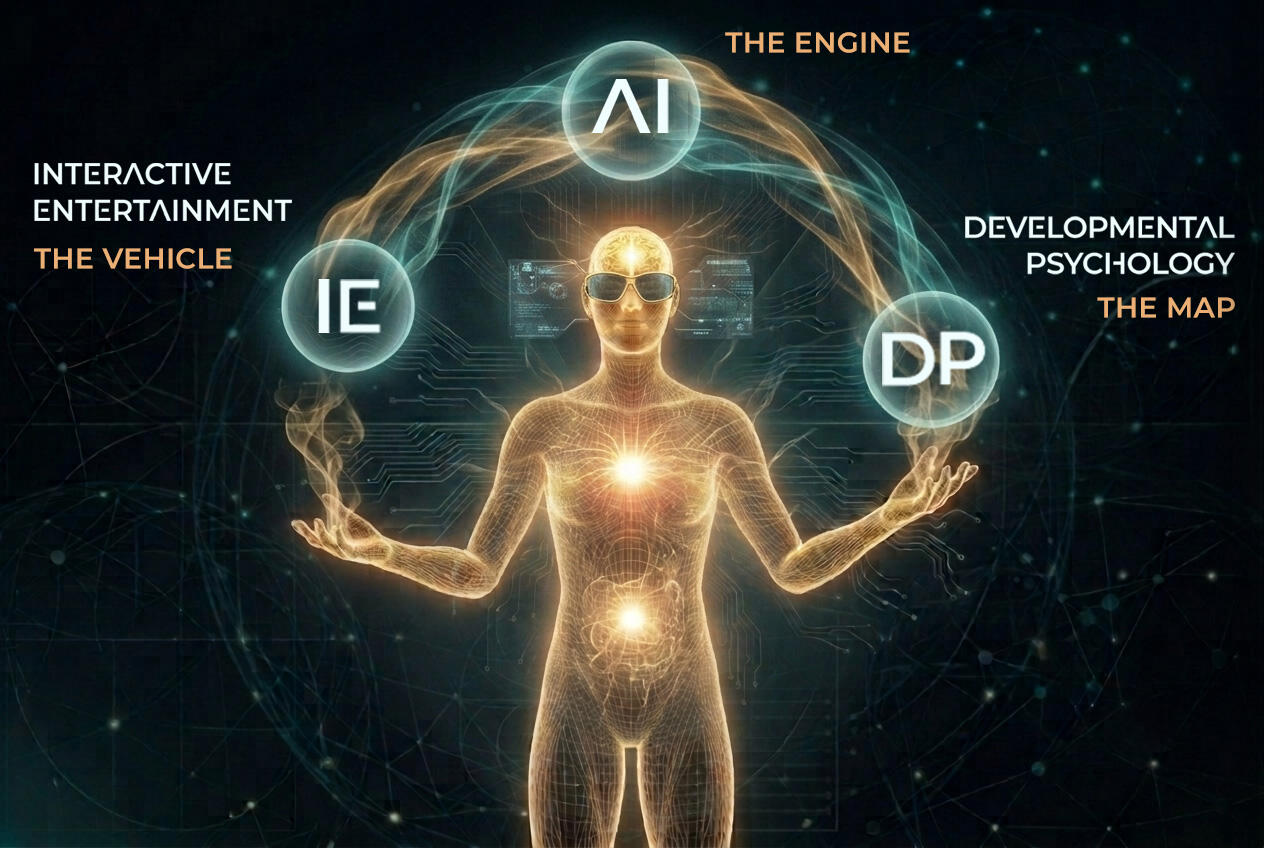
This research explores how interactive systems can catalyze human development using structured
psychological frameworks and adaptive technologies such as AI.
Early explorations of this architecture were implemented in educational, interactive entertainment,
and installation contexts more than a decade ago.The vision was clear.
The execution tools were limited.
Today, the technological environment has caught up.
Levels (Stages of Development) - evolving structures of meaning-makingLines (Multiple Intelligences) - different capacities developing at different speedsStates - states of awareness and conditions such as flow, engagement, stress, or opennessLife Dimensions (the “4 Quadrants” of Reality) - inner experience, behavior, relationships, systemsTypes (Typologies)- stable personality patterns influencing interaction

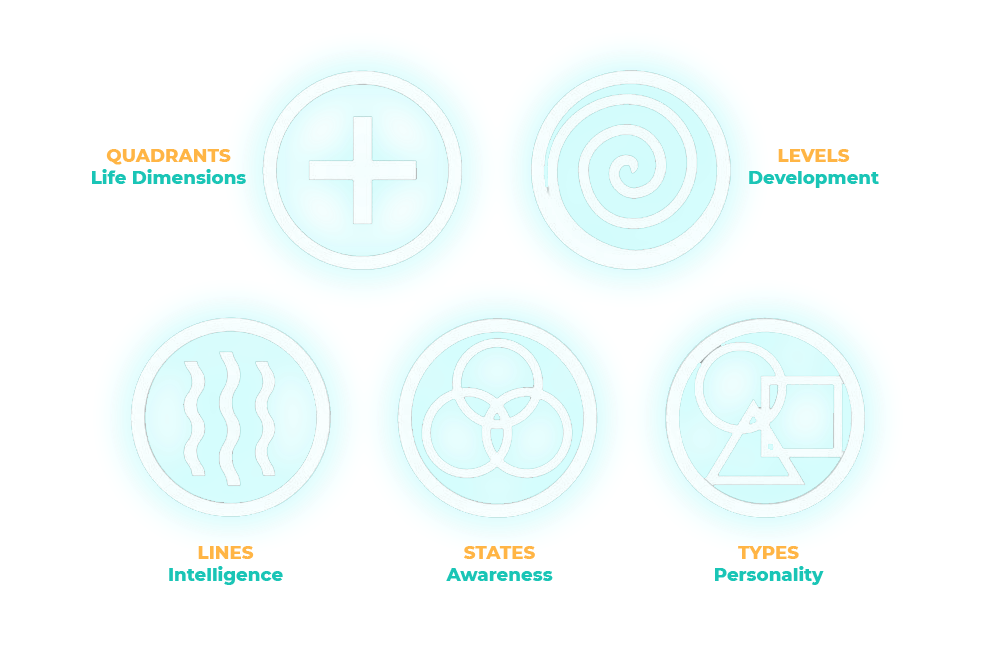

The goal is not theoretical density.
The goal is design precision.
An interactive system informed by these dimensions can:
• Meet users where they are• Challenge them at their developmental edge• Adjust without overwhelming• Support growth without coercion

The Present Moment
AI does not replace developmental psychology, mentoring, coaching, education, or therapy.
It enables adaptive developmental systems to exist.
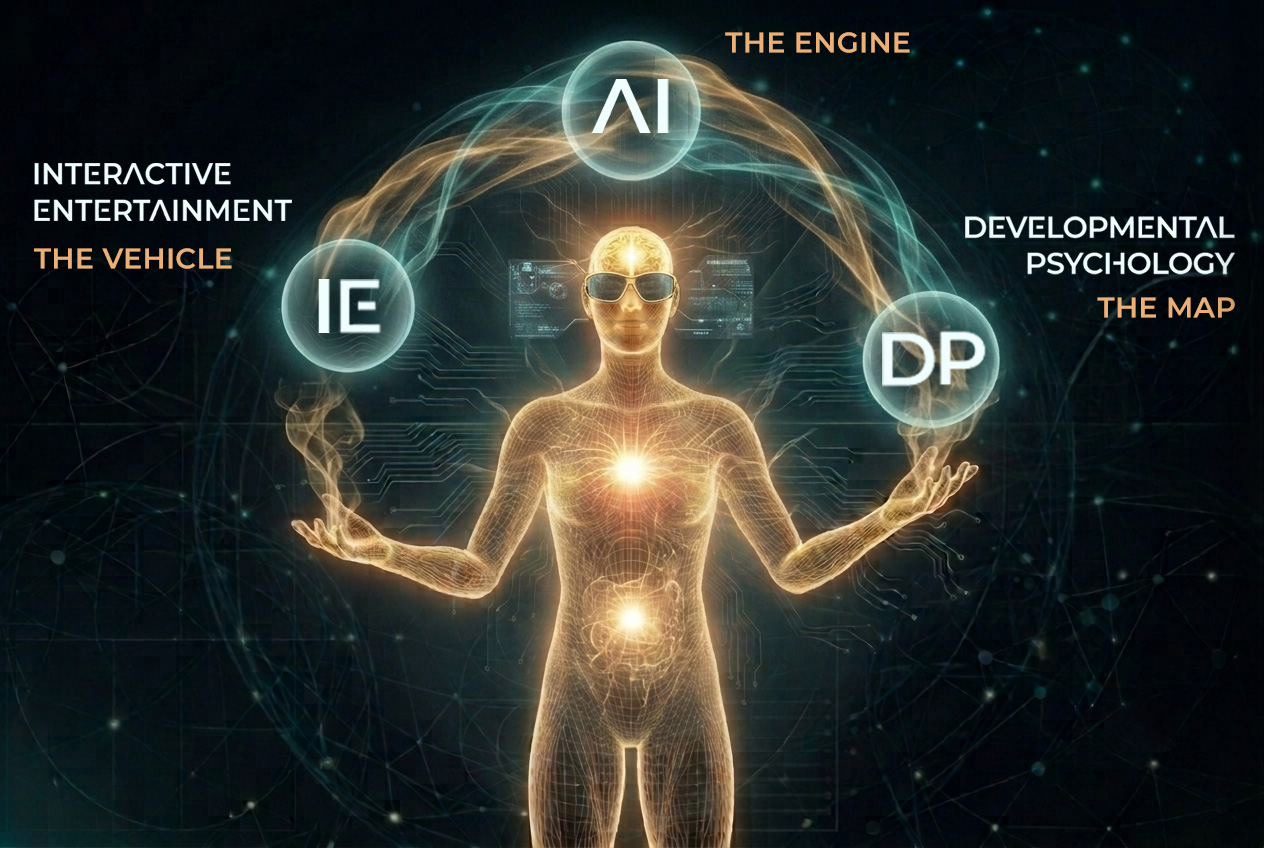
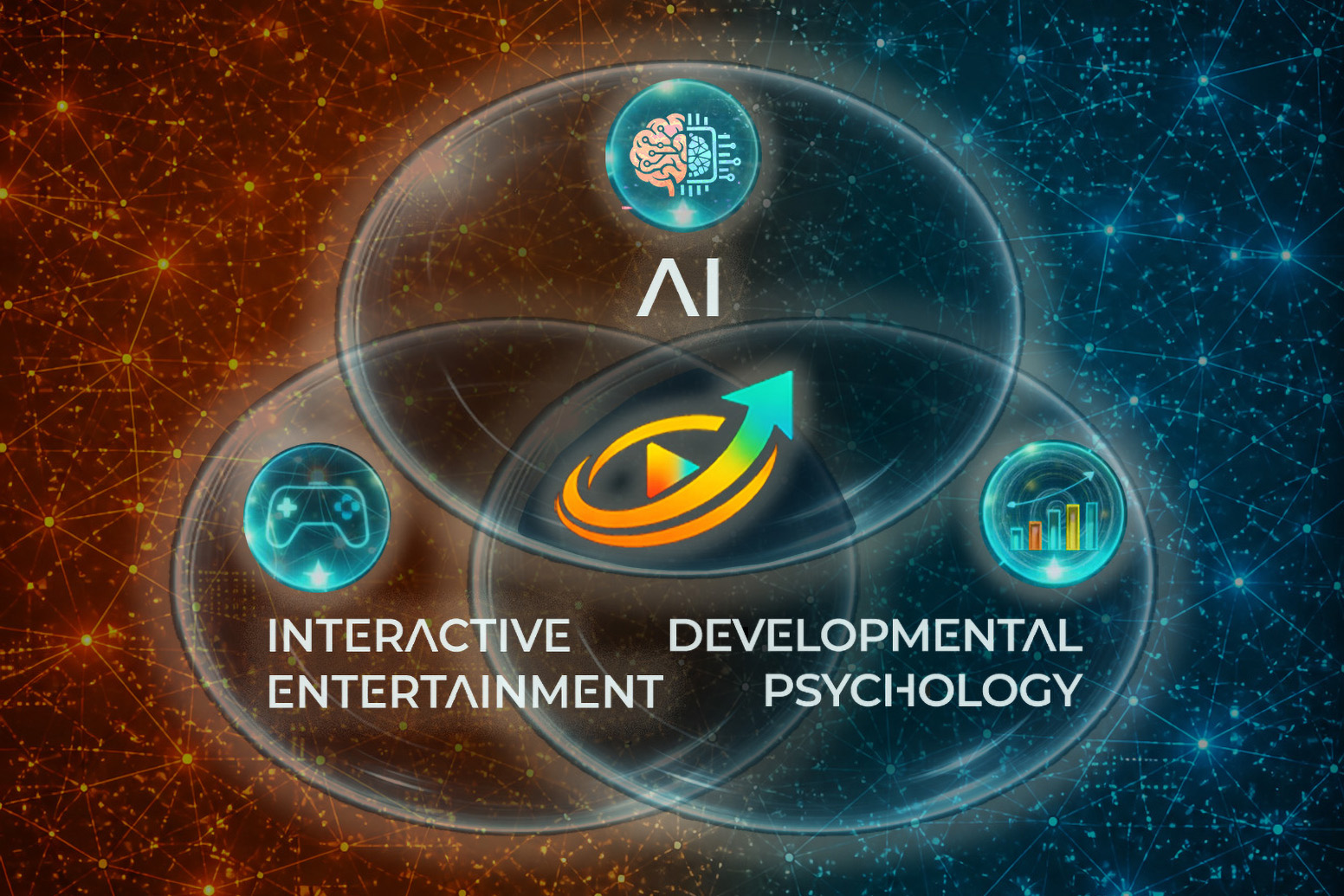
The synergistic convergence of
• Developmental science• Interactive design• Simulation environments• Adaptive AI systems
…opens new categories of possibilities.
Not just better games.
Not just better simulations.
But systems intentionally structured to catalyze growth through play, joy, flow, and engagement.
The architecture has not changed
The world around it has
And for the first time, the system can become real.



Site Architecture
Home



Gateway Pages









Research Trajectory · Deep Dive





Communication · Many Channels








contact
On the same wavelength?
If this research resonates with you - whether you work in AI, Interactive Entertainment, or
Developmental Psychology, or simply want to connect as a kindred spirit - let's talk.


Framework·Research Overview

© 2026 Press Play to Grow! All rights reserved.